SelfDefinition.Org
Awareness Watching Awareness
Mirror Site for "Awareness" pages, originally published on Tripod.
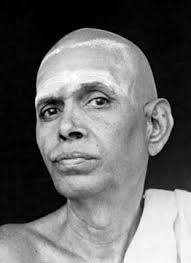
Instructions and Encouragement for Practice by SRI NISARGADATTA MAHARAJ
Many modern teachers have extracted quotes by Sri Nisargadatta to make it appear as though he taught no practice and nothing to do. This is an error and a distortion. The focus of this selection is to report essential teachings of Sri Nisargadatta Maharaj that people often tend to overlook.
Nisargadatta's Teaching is that of practice, just as Sri Siddharameshwar Maharaj (Nisargadatta's Guru), Sri Ramana Maharshi and Acharya Sankara's Teachings are of practice. For every one quote that might indicate no practice in the book I am That, you can easily find ten that explain the importance of practice and how to practice. The following quotes are presented in the order in which they appear in I am That.
Nisargadatta said:
|
1. |
Go deep into the sense of 'I am' and you will find. How do you find a thing you have mislaid or forgotton? You keep it in your mind until you recall it. The sense of being, of 'I am' is the first to emerge. Ask yourself whence it comes, or just watch it quietly. When the mind stays in the 'I am', without moving, you enter a state that cannot be verbalized but can be experienced. All you need to do is to try and try again. |
|
2. |
I see what you too could see, here and now, but for the wrong focus of your attention. You give no attention to your self. Your mind is all with things, people and ideas, never with your self. Bring your self into focus, become aware of your own existence. See how you function, watch the motives and results of your actions. Study the prison you have built around yourself, by inadvertence. |
|
3. |
We discover it by being earnest, by searching, inquiring, questioning daily and hourly, by giving one's life to this discovery. |
|
4. |
Look at the net [one's personal world] and its many contradictions. You do and undo at every step. You want peace, love, happiness and work hard to create pain, hatred and war. You want longevity and overeat, you want friendship and exploit. See your net as made of such contradictions and remove them - your very seeing will make them go. |
|
5. |
How do you go about finding anything? By keeping your mind and heart on it. Interest there must be and steady remembrance. To remember what needs to be remembered is the secret of success. You come to it through earnestness. |
|
6. |
What is supremely important is to be free from contradictions: the goal and the way must not be on different levels; life and light must not quarrel; behaviour must not betray belief. Call it honesty, integrity, wholeness; you must not go back, undo, uproot, abandon the conquered ground. Tenacity of purpose and honesty in pursuit will bring you to your goal. |
|
7. |
Take the first step first. All blessings come from within. Turn within. 'I am' you know. Be with it all the time you can spare, until you revert to it spontaneously. There is no simpler and easier way. |
|
8. |
We know the outer world of sensations and actions, but of our inner world of thoughts and feelings we know very little. The primary purpose of meditation is to become conscious of, and familiar with, our inner life. The ultimate purpose is to reach the source of life and consciousness. Incidentally, practice of meditation affects deeply our character. We are slaves to what we do not know; of what we know we are masters. Whatever vice or weakness in ourselves, we discover and understand its causes and its workings, we overcome it by the very knowing; the unconscious dissolves when brought into the conscious. The dissolution of the unconscious releases energy; the mind feels adequate and becomes quiet. |
|
9. |
It is not so much the matter of levels as of gunas (qualities). Meditation is a sattvic (pure, true) activity and aims at complete elimination of tamas (inertia) and rajas (motivity, activity). Pure sattva (harmony) is perfect freedom from sloth and restlessness. |
|
10. |
Questioner: Since I cannot improve sattva, am I to deal with tamas and rajas only? How do I deal with them? Nisargadatta: By watching their influence in you and on you. Be aware of them in operation, watch their expression in your thoughts, words and deeds, and gradually their grip on you will lessen and the clear light of sattva will emerge. |
|
11. |
Refuse all thoughts except one: the thought 'I am'. The mind will rebel in the beginning, but with patience and perserverance it will yield and keep quiet. |
|
12. |
True happiness cannot be found in things that change and pass away. Pleasure and pain alternate inexorably. Happiness comes from the self and can be found in the self only. Find your real self (swarupa) and all else will come with it. |
|
13. |
Every pleasure, physical or mental, needs an instrument. Both the physical and mental instruments are material, they get tired and worn out. The pleasure they yield is necessarily limited in its intensity and duration. Pain is the background of all your pleasures. You want them because you suffer. On the other hand, the very search for pleasure is the cause of pain. It is a vicious circle. |
|
14. |
Q: I can see the mechanism of my confusion, but I do not see my way out of it. Nisargadatta: The very examination of the mechanism shows the way. After all, your confusion is only in your mind, which so far has never rebelled against confusion and never got to grips with it. It rebelled only against pain. |
|
15. |
Be alert. Question, observe, investigate, learn all you can about confusion, how it operates, what it does to you and others. By being clear about confusion you become clear of confusion. |
|
16. |
By elminating the intervals of inadvertance during the waking hours you will gradually eliminate the long interval of absent-mindedness, which you call sleep. You will be aware that you are asleep. |
|
17. |
Nisargadatta: You can have for the asking all the peace you want. Q: I am asking. Nisargadatta: You must ask with an undivided heart and live an integrated life. Q: How? Nisargadatta: Detach yourself from all that makes your mind restless. Renounce all that disturbs its peace. If you want peace, deserve it. Q: Surely everybody deserves peace Nisargadatta: Those only deserve it, who don't disturb it. Q: In what way do I disturb peace? Nisargadatta: By being a slave to your desires and fears. Q: Even when they are justified? Nisargadatta: Emotional reactions, born of ignorance or inadvertance, are never justified. Seek a clear mind and a clean heart. All you need is to keep quietly alert, inquiring into the real nature of yourself. This is the only way to peace. |
|
18. |
All these sufferings are man-made and it is within man's power to put an end to them. God helps by facing man with the results of his actions and demanding that the balance be restored. Karma is the law that works for righteousness; it is the healing hand of God. |
|
19. |
Use your mind. Remember. Observe. You are not different from others. Most of their experiences are valid for you too. Think clearly and deeply, go into the structure of your desires and their ramifications. They are a most important part of your mental and emotional make-up and powerfully affect your actions. Remember, you cannot abandon what you do not know. To go beyond yourself, you must know yourself. |
|
20. |
Purify yourself by a well-ordered and useful life. Watch over your thoughts, feelings, words and actions. This will clear your vision. |
|
21. |
Q: Well, you told me that I am the Supreme Reality. I believe you. What next is there for me to do? Nisargadatta: I told you already. Discover all that you are not. Body, feelings, thoughts, ideas, time, space, being and not-being, this or that - nothing concrete or abstract you can point out to is you. A mere verbal statement will not do - you may repeat a formula endlessly without any result whatsoever. You must watch yourself continuously - particularly your mind - moment by moment, missing nothing. This witnessing is essential for the separation of the self from the not-self. |
|
22. |
Q: What about witnessing the witness? Nisargadatta: Putting words together will not take you far. Go within and discover what you are not. Nothing else matters. |
|
23. |
Since it is awareness that makes consciousness possible, there is awareness in every state of consciousness. Therefore, the very consciousness of being conscious is already a movement in awareness. Interest in your stream of consciousness takes you to awareness. It is not a new state. It is at once recognized as the original, basic existence, which is life itself, and also love and joy. |
|
24. |
Realization is but the opposite of ignorance. To take the world as real and one's self as unreal is ignorance, the cause of sorrow. To know the self as the only reality and all else as temporal and transient is freedom, peace and joy. It is all very simple. Instead of seeing things as imagined, learn to see them as they are. When you can see everything as it is, you will also see yourself as you are. It is like cleansing a mirror. The same mirror that shows you the world as it is, will also show you your own face. The thought 'I am' is the polishing cloth. Use it. |
|
25. |
Devotion to your goal makes you live a clean and orderly life, given to the search for truth and to helping people. And realization makes noble virtue easy and spontaneous, by removing for good the obstacles in the shape of desires and fears and wrong ideas. |
|
26. |
The entire purpose of a clean and well-ordered life is to liberate man from the thaldrom of chaos and the burden of sorrow. |
|
27. |
In reality only the Ultimate is. The rest is a matter of name and form. And as long as you cling to the idea that only what has name and shape exists, the Supreme will appear to you non-existing. When you understand that names and shapes are hollow shells without any content whatsoever, and what is real is nameless and formless, pure energy of life and light of consciousness, you will be at peace - immersed in the deep silence of reality. |
|
28. |
All will happen as you want it, provided you really want it. |
|
29. |
Within the prison of your world appears a man who tells you that the world of painful contradictions, which you have created, is neither continuous nor permanent and is based on a misaprehension. He pleads with you to get out of it, by the same way by which you got into it. You got into it by forgetting what you are and you will get out of it by knowing yourself as you are. |
|
30. |
Why not turn away from the experience to the experiencer and realize the full import of the only true statement you can make: 'I am'? |
|
31. |
Just keep in mind the feeling 'I am', merge in it, till your mind and feeling become one. By repeated attempts you will stumble on the right balance of attention and affection and your mind will be firmly established in the thought-feeling 'I am'. |
|
32. |
Q: Then what is needed? Nisargadatta: Distrust your mind, and go beyond. Q: What shall I find beyond the mind? Nisargadatta: The direct experience of being, knowing and loving. Q: How does one go beyond the mind? Nisargadatta: There are many starting points - they all lead to the same goal. You may begin with selfless work, abandoning the fruits of action; you may then give up thinking and in the end give up all desires. Here, giving up (tyaga) is the operational factor. Or you may not bother about anything you want, or think, or do and just stay put in the thought and feeling 'I am, focussing 'I am firmly in your mind. All kind of experience may come to you - remain unmoved in the knowledge that all perceivable is transient, and only the 'I am' endures. |
|
33. |
Q: The inner teacher is not easily reached. Nisargadatta: Since he is in you and with you, the difficulty cannot be serious. Look within and you will find him. Q: When I look within, I find sensations and perceptions, thoughts and feelings, desires and fears, memories and expectations. I am immersed in this cloud and see nothing else. Nisargadatta: That which sees all this, and the nothing too, is the inner teacher. He alone is, all else only appears to be. He is your own self (swarupa), your hope and assurance of freedom; find him and cling to him and you will be saved and safe. |
|
34. |
Seeing the false as false, is meditation. This must go on all the time. |
|
35. |
Deliberate daily exercise in discrimination between the true and the false, and renunciation of the false, is meditation. |
|
36. |
I can tell you about myself. I was a simple man, but I trusted my Guru. What he told me to do, I did. He told me to concentrate on 'I am' - I did. He told me that I am beyond all perceivables and conceivables - I believed. I gave him my heart and soul, my entire attention and the whole of my spare time (I had to work to keep my family alive). As a result of faith and earnest application, I realized my self (swarupa) within three years. |
|
37. |
Establish yourself in the awareness of 'I am'. This is the beginning and also the end of all endeavour. |
|
38. |
Meditation will help you to find your bonds, loosen them, untie them and cast your moorings. |
|
39. |
To solve a problem you must trace it to its source. Only in the dissolution of the problem in the universal solvents of inquiry and dispassion, can its right solution be found. |
|
40. |
Why don't you inquire how real are the world and the person? |
|
41. |
Nisargadatta: Because of you, there is a world. Q: To me such statement appears meaningless. Nisargadatta: Its meaninglessness may disappear on investigation. |
|
42. |
To know what you are, you must first investigate and know what you are not. And to know what you are not you must watch yourself carefully, rejecting all that does not necessarily go with the basic fact: 'I am'. The ideas: I am born at a given place, at a given time, from my parents and now I am so-and-so, living at, married to, father of, employed by, and so on, are not inherent in the sense 'I am'. Our usual attitude is of 'I am this'. Separate consistently and perserveringly the 'I am' from 'this' or 'that', and try to feel what it means to be, just to be, without being 'this' or 'that'. All our habits go against it and the task of fighting them is long and hard sometimes, but clear understanding helps a lot. The clearer you understand that on the level of the mind you can be described in negative terms only, the quicker you will come to the end of your search and realize your limitless being. |
|
43. |
When things repeatedly happen together, we tend to see a causal link between them. It creates a mental habit, but a habit is not a necessity. |
|
44. |
False ideas about this 'I am' lead to bondage, right knowledge leads to freedom and happiness. |
|
45. |
Nisargadatta: It is solid, steady, changless, beginingless and endless, ever new, ever fresh. Q: How is it reached? Nisargadatta: Desirelessness and fearlessness will take you there. |
|
46. |
The sense 'I am' is your own. You cannot part with it, but you can impart it to anything, as in saying: 'I am young, I am rich, etc.' But such self-identifications are patently false and the cause of bondage. |
|
47. |
The Supreme is the easiest to reach for it is your very being. It is enough to stop thinking and desiring anything, but the Supreme. |
|
48. |
By forgetting who you are and imagining yourself a mortal creature, you created so much trouble for yourself that you have to wake up, like from a bad dream. Inquiry also wakes you up. |
|
49. |
Truth is simple and open to all. Why do you complicate? Truth is loving and lovable. It includes all, accepts all, purifies all. It is untruth that is difficult and a source of trouble. It always wants, expects, demands. Being false, it is empty, always in search of confirmation and reassurance. It is afraid of and avoids inquiry. It identifies itself with any support, however weak and momentary. Whatever it gets, it loses and asks for more. |
|
50. |
Q: What is permanent? Nisargadatta: Look to yourself for the permanent. Dive deep within and find what is real in you. Q: How to look for myself? Nisargadatta: Whatever happens it happens to you. What you do, the doer is in you. Find the subject of all that you are as a person. Q: What else can I be? Nisargadatta: Find out. Even if I tell you that you are the witness, the silent watcher, it will mean nothing to you, unless you find the way to your own being. Q: My question is: How to find the way to one's own being? Nisargadatta: Give up all questions except one: 'Who am I?' After all, the only fact you are sure of is that you are. The 'I am' is certain. The 'I am this' is not. Struggle to find out what you are in reality. |
|
51. |
'I am' itself is God. The seeking itself is God. In seeking you discover that you are neither the body nor the mind, and the love of the self in you is for the self in all. The two are one. The consciousness in you and the consciousness in me, apparently two, really one, seek unity and that is love. |
|
52. |
Q: How am I to find that love? Nisargadatta: What do you love now? The 'I am'. Give your heart and mind to it, think of nothing else. |
|
53. |
All desire has its source in the self. It is all a matter of choosing the right desire. |
|
54. |
Nisargadatta: All these questions arise from your believing yourself to be a person. Go beyond the personal and see. |
|
55. |
I ask you only to stop imagining that you were born, have parents, are a body, will die and so on. Just try, make a beginning - it is not as hard as you think. |
|
56. |
Whatever you do against your better knowledge is sin. |
|
57. |
Remembering yourself is virtue, forgetting yourself is sin. |
|
58. |
When you shall begin to question your dream, awakening will not be far away. |
|
59. |
Steady faith is stronger than destiny. Destiny is the result of causes, mostly accidental, and is therefore loosely woven. Confidence and good hope will overcome it easily. |
|
60. |
Q: In Europe there is no tradition of a mantra, except in some contemplative orders. Of what use is it to a modern day young Westerner? Nisargadatta: None, unless he is very much attracted. For him the right procedure is to adhere to the thought that he is the ground of all knowledge, the immutable and perennial awareness of all that happens to the senses and mind. If he keeps it in mind all the time, aware and alert, he is bound to break the bounds of non-awareness and emerge into pure life, light and love. The idea - 'I am the witness only' will purify the body and the mind and open the eye of wisdom. Then man goes beyond illusion and his heart is free of all desires. Just like ice turns to water and water to vapour, and vapour dissolves in air and disappears into space, so does the body dissolve into pure awareness (chidakash), then into pure being (paramakash), which is beyond all existence and non-existence. |
|
61. |
You should consider more closely your own world, examine it critically and, suddenly, one day you will find yourself in mine. |
|
62. |
See your world as it is, not as you imagine it to be. Discrimination will lead to detachment; detachment will ensure right action, right action will build the inner bridge to your real being. Action is proof of earnestness. Do what you are told diligently and faithfully and all obstacles will disolve. |
|
63. |
Investigate your world, apply your mind to it, examine it critically, scrutinize every idea about it; that will do. |
|
64. |
The entire universe of pain is born of desire. Give up the desire for pleasure and you will not even know what is pain. |
|
65. |
By its very nature pleasure is limited and transient. Out of pain desire is born, in pain it seeks fulfilment, and it ends in the pain of frustration and despair. Pain is the background of pleasure, all seeking of pleasure is born in pain and ends in pain. |
|
66. |
Sorting out and discarding (viveka-vairagya) are absolutely necessary. Everything must be scrutinized and the unnecessary ruthlessly destroyed. Believe me, there cannot be too much destruction. For in reality nothing is of value. Be passionately dispassionate - that is all. |
|
67. |
When through the practice of discrimination and detachment (viveka-vairagya) you lose sight of sensory and mental states, pure being emerges as the natural state. |
|
68. |
Q: How does one bring to an end this sense of separateness? Nisargadatta: By focusssing the mind on 'I am', on the sense of being. 'I am so-and-so' dissolves, 'I am a witness only' remains and that too submerges in 'I am all'. Then the all becomes the One and the One - yourself, not separate from me. Abandon the idea of a separate 'I' and the question of 'whose experience?' will not arise. |
|
69. |
Dive deep within yourself and you will find it easily and simply. Go in the direction of 'I am'. |
|
70. |
To know the world you forget the self - to know the self you forget the world. What is the world after all? A collection of memories. Cling to one thing that matters, hold on to 'I am' and let go all else. This is sadhana. |
|
71. |
Q: I do not feel the world is the result of a mistake. Nisargadatta: You may say so only after a full investigation, not before. Of course, when you discern and let go all that is unreal, what remains is real. |
|
72. |
Be fully aware of your own being and you will be in bliss consciously. Because you take your mind off yourself and make it dwell on what you are not, you lose your sense of well-being, of being well. |
|
73. |
Q: There are two paths before us the path of effort (yoga marga), and the path of ease (bhoga marga). Both lead to the same goal - liberation. Nisargadatta: Why do you call bhoga a path? How can ease bring you perfection? Q: The perfect renouncer (yogi) will find reality. The perfect enjoyer (bhogi) also will come to it. Nisargadatta: How can it be? Aren't they contradictory? |
|
74. |
Q: Similarly the good news of enlightenment will, sooner or later, bring about a transformation. Nisargadatta: Yes, first hearing (shravana), then remembering (smarana), pondering (manana) and so on. We are on familiar ground. The man who heard the news becomes a Yogi; while the rest continue in their Bhoga. |
|
75. |
As you are now, the personality is only an obstacle. Self-identification with the body may be good for an infant, but true growing up depends on getting the body out of the way. Normally, one should outgrow body-based desires early in life. Even the Bhogi, who does not refuse enjoyments, need not hanker after the ones he has tasted. Habit, desire for repetition, frustrates both the Yogi and the Bhogi. |
|
76. |
Q: Why do you keep on dismissing the person (vyakti) as of no importance? Personality is the primary fact of our existence. It occupies the entire stage. Nisargadatta: As long as you do not see that it is a mere habit, built on memory, prompted by desire, you will think yourself to be a person - living, feeling, thinking, active, passive, pleased or pained. Question yourself, ask yourself: 'Is it so?', 'Who am I?', 'What is behind and beyond all this?' And soon you will see your mistake. And it is in the very nature of a mistake to cease to be, when seen. |
|
77. |
There are so many who take the dawn for the noon, a momentary experience for full realization and destroy even the little they gain by excess of pride. Humility and silence are essential for a sadhaka, however advanced. Only a fully ripened gnani can allow himself complete spontaneity. |
|
78. |
Pure experience does not bind; experience caught between desire and fear is impure and creates karma. |
|
79. |
Be attentive, enquire ceaselessly. That is all. |
|
80. |
A spark of truth can burn up a mountain of lies. The opposite is also true. The sun of truth remains hidden behind the cloud of self-identification with the body. |
|
81. |
Q: What is a fact? Nisargadatta: What is perceived in pure awareness, unaffected by desire and fear is fact. |
|
82. |
The Yogi is narrow as the sharp edge of the knife. He has to be - to cut deep and smoothly, to penetrate unerringly the many layers of the false. The Bhogi worships at many altars; the Yogi serves none but his own true Self. |
|
84. |
There are no others [for the yogis] to help. |
|
85. |
The only thing that can help is to wake up from the dream. |
|
86. |
The self by its nature knows itself only. For lack of experience, whatever it perceives, it takes to be itself. Battered, it learns to look out (viveka) and to live alone (vairagya). When right behaviour (uparati), becomes normal, a powerful inner urge (mukmukshutva) makes it seek its source. The candle of the body is lighted and all becomes clear and bright (atmaprakash). |
|
85. |
Q: What is the real cause of suffering? Nisargadatta: Self-identification with the limited. Sensations as such, do not cause suffering. It is the mind, bewildered by wrong ideas, addicted to thinking: 'I am this', 'I am that', that fears loss and craves gain and suffers when frustrated. |
|
86. |
Q: A friend of mine used to have horrible dreams night after night. Going to sleep would terrorise him. Nothing could help him. Nisargadatta: Company of the truly good (satsang) would help him. |
|
87. |
Seek within. Your own self is your best friend. |
|
88. |
As long as we delude ourselves by what we imagine ourselves to be, to know, to have, to do, we are in a sad plight indeed. Only in complete self-negation is there a chance to discover our real being. |
|
89. |
The false self must be abandoned before the real self can be found. |
|
90. |
Perceptions based on sensations and shaped by memory imply a perceiver, whose nature you never cared to examine. Give it your full attention, examine it with loving care and you will discover heights and depths of being which you did not dream of, engrossed as you are in your puny image of yourself. |
|
91. |
You must be serious, intent, truly interested. You must be full of goodwill for yourself. |
|
92. |
By all means be selfish - the right way. Wish yourself well, labour at what is good for you. Destroy all that stands betweeen you and happiness. Be all - love all - be happy - make happy. |
|
93. |
Q: What is the place of sex in love? Nisargadatta: Love is a state of being. Sex is energy. Love is wise, sex is blind. |
|
94. |
Without love all is evil. Life itself without love is evil. |
|
95. |
You are love itself - when you are not afraid. |
|
96. |
Memory is material - destructible, perishable, transient. On such flimsy foundations we build a sense of personal existence - vague, intermittent, dreamlike. This vague persuasion: 'I am so-and-so' obscures the changless state of pure awareness and makes us believe that we are born to suffer and to die. |
|
97. |
There is progress all the time. Everything contributes to progress. But this is the progress of ignorance. The circles of ignorance may be ever widening, yet it remains a bondage all the same. In due course a Guru appears to teach and inspire us to practise Yoga and a ripening takes place, as a result of which the immemorial night of ignorance dissolves before the rising sun of wisdom. |
|
98. |
When ignorance becomes obstinate and hard and the character gets perverted, effort and the pain of it become inevitable. |
|
99. |
Freedom to do what one likes is really bondage, while being free to do what one must, what is right, is real freedom. |
|
100. |
You mean to say everybody's life is totally determined at his birth? What a strange idea! Were it so, the power that determines would see to it that nobody should suffer. |
|
101. |
Man alone can destroy in himself the roots of pain. |
|
102. |
Not to know, and not to know that one does not know, is the cause of endless suffering. |
|
103. |
What business have you with saving the world, when all the world needs is to be saved from you? Get out of the picture and see whether there is anything left to save. |
|
104. |
Just like a deficiency disease is cured through the supply of the missing factor, so are the diseases of living cured by a good dose of intelligent detachment (viveka-vairagya). |
|
105. |
Remove the sense of separateness and there will be no conflict. |
|
106. |
All you have to do is to see the dream as dream. |
|
107. |
Whatever name you give it: will, or steady purpose, or one pointedness of mind, you come back to earnestness, sincerity, honesty. When you are in dead earnest, you bend every incident, every second of your life to your purpose. You do not waste time and energy on other things. You are totally dedicated, call it will, or love, or plain honesty. We are complex beings, at war within and without. We contradict ourselves all the time, undoing today the work of yesterday. No wonder we are stuck. A little of integrity would make a lot of difference. |
|
108. |
Collect and strengthen your mind and you will find that your thoughts and feelings, words and actions will align themselves in the direction of your will. |
|
109. |
Weak-mindedness is due to lack of intelligence, of understanding, which again is the result of non-awareness. By striving for awareness you bring your mind together and strengthen it. |
|
110. |
Q: I may be fully aware of what is going on, and yet quite unable to influence it in any way. Nisargadatta: You are mistaken. What is going on is a projection of your mind. A weak mind cannot control its own projections. Be aware, therefore, of your mind and its projections. You cannot control what you do not know. On the other hand, knowledge gives power. In practice it is very simple. To control yourself - know yourself. |
|
111. |
Go to the source of both pain and pleasure, of desire and fear. Observe, investigate, try to understand. |
|
112. |
Once the illusion that the body-mind is oneself is abandoned, death loses its terror, it becomes a part of living. |
|
113. |
Find the permanent in the fleeting, the one constant factor in every experience. |
|
114. |
First purify your vision. Learn to see instead of staring. Also you must be eager to see. You need to both clarity and earnestness for self-knowledge. You need purity of heart and mind, which comes through earnest application in daily life of whatever little you have understood. There is no such thing as compromise in Yoga. |
|
115. |
Nothing can block you so effectively as compromise, for it shows lack of earnestness, without which nothing can be done. |
|
116. |
Begin by disassociating yourself from your mind. Resolutely remind yourself that you are not the mind and that its problems are not yours. |
|
117. |
Go on pondering, wondering, being anxious to find a way. Be conscious of yourself, watch your mind, give it your full attention. Don't look for quick results; there may be none within your noticing. Unkown to you, your psyche will undergo a change, there will be more clarity in your thinking, charity in your feeling, purity in your behaviour. You need not aim at these - you will witness the change all the same. For, what you are now is the result of inattention and what you become will be the fruit of attention. |
|
118. |
Do not undervalue attention. It means interest and also love. To know, to do, to discover, or to create you must give your heart to it - which means attention. All blessings flow from it. |
|
119. |
Q: You advise us to concentrate on 'I am'. Is this too a form of attention? Nisargadatta: What else? Give your undivided attention to the most important in your life - yourself. Of your personal universe you are the center - without knowing the center what else can you know? |
|
120. |
Q: How am I to get such a stainless mirror? Nisargadatta: Obviously, by removing stains. See the stains and remove them. The ancient teaching is fully valid. |
|
121. |
Nisargadatta: The nature of the perfect mirror is such that you cannot see it. Whatever you can see is bound to be a stain. Turn away from it, give it up, know it as unwanted. Q: All perceivables, are they stains? Nisargadatta: All are stains Q: The entire world is a stain. Nisargadatta: Yes, it is. Q: How awful! So, the universe is of no value? Nisargadatta: It is of tremendous value. By going beyond it you realize yourself. Q: But why did it come into being in the first instance? Nisargadatta: You will know when it ends. Q: Will it ever end? Nisargadatta: Yes, for you. Q: When did it begin? Nisargadatta: Now. Q: When will it end? Nisargadatta: Now. Q: It does not end now? Nisargadatta: You don't let it. Q: I want to let it. Nisargadatta: You don't. All your life is connected with it. Your past and future, your desires and fears, all have their roots in the world. Without the world where are you. who are you? Q: But that is exactly what I came to find out. Nisargadatta: And I am telling you exactly this: find a foothold in the beyond and all will be clear and easy. |
|
122. |
Is not meaness also a form of madness? And is not madness the misuse of the mind? Humanity's problem lies in this misuse of the mind only. All treasures of nature and spirit are open to man who will use his mind rightly. |
|
123. |
Fear and greed cause the misuse of the mind. The right use of mind is the service of love, life, of truth, of beauty. |
|
124. |
Attend to yourself, set yourself right - mentally and emotionally. Leave alone the reforms and mind the reformer. |
|
125. |
All you need is to stop searching outside what can be found only within. Set your vision right before you operate. You are suffering from acute misapprehension. Clarify your mind, purify your heart, sanctify your life - this is the quickest way to a change of your world. |
|
126. |
Problems [in the material world] created by desires and fears and wrong ideas can be solved only on the level of the mind. You must conquer your own mind and for this you must go beyond it. |
|
127. |
To go beyond the mind, you must have your mind in perfect order. You cannot leave a mess behind and go beyond. The mess will bog you up. 'Pick up your rubbish' seems to be the Universal law. And a just law too. |
|
128. |
Just remember yourself. 'I am', is enough to heal your mind and take you beyond. Just have some trust. Commonsense too will tell you that to fulfill a desire you must keep your mind on it. If you want to know your true nature, you must have yourself in mind all the time, until the secret of your being stands revealed. |
|
129. |
To help others, one must be beyond the need of help. |
|
130. |
It is not the worship of a person [guru] that is crucial, but the steadiness and depth of your devotion to the task. Remember, wonder, ponder, live with it, love it, grow into it, grow with it, make it your own - the word of your Guru, outer or inner. Put in all and you will get all. I was doing it. All my time I was giving to my Guru and to what he told me. |
|
131. |
It is easy, if you are earnest. |
|
132. |
When you are concerned with truth, with reality, you must question everything, your very life. By asserting the necessity of sensory and intellectual experience [craving sensory experience] you narrow down your inquiry to search for comfort. |
|
133. |
Question every urge, hold no desire legitimate. Empty of possession, physical and mental, free of all self-concern, be open for discovery. |
|
134. |
Have your Guru always in your heart and remember his instructions - this is real abidance with the true. |
|
135. |
You can not speak of a beginning of consciousness. The very ideas of beginning and time are within consciousness. To talk meaningfully of the beginning of anything, you must step out of it. And the moment you step out, you realize that there is no such thing and never was. |
|
136. |
The illusion of being the body-mind is there, only because it is not investigated. Non-investigation is the thread on which all the states of mind are strung. All states of mind, all names and forms of existence are rooted in non-inquiry, non-investigation, in imagination and credulity. It is right to say 'I am', but to say 'I am this', 'I am that' is a sign of not inquiring, not examining, of mental weakness or lethargy. |
|
137. |
When we are absorbed in other things, in the not-self, we forget the self. |
|
138. |
Sadhana (practice) consists in reminding oneself forcibly of one's pure 'being-ness', of not being anything in particular, nor a sum of particulars, not even the totality of particulars, which make up a universe. |
|
139. |
Inquire what is permanent in the transient, real in the unreal. This is sadhana. |
|
140. |
Think of yourself by all means. Only don't bring the idea of a body into the picture. |
|
141. |
Attachment is bondage, detachment is freedom. To crave is to slave. |
|
142. |
Inertia and restlessness (tamas and rajas) work together and keep clarity and harmony (sattva) down. Tamas and rajas must be conquered before Sattva can appear. |
|
143. |
You come to it by putting an end to indolence and using all your energy to clear the way for clarity and charity. Don't be afraid, don't resist, don't delay. There is nothing to be afraid of. Trust and try. Experiment honestly. |
|
144. |
That immovable state, which is not affected by the birth and death of a body or a mind, that state you must perceive. |
|
145. |
In life nothing can be had without overcoming obstacles. The obstacles to the clear perception of one's true being are desire for pleasure and the fear of pain. It is the pleasure-pain motivation that stands in the way. |
|
146. |
Leave alone your desires and fears, give your entire attention to the subject, to him who is behind the experience of desire and fear. Ask: who desires? Let each desire bring you back to yourself. |
|
147. |
It would be a grievous mistake to identify yourself with something external. |
|
148. |
The desire to find the self will surely be fulfilled, provided you want nothing else. But you must be honest with yourself and really want nothing else. If in the meantime you want many other things and are engaged in their pursuit, your main purpose may be delayed until you grow wiser and cease being torn between contradictory urges. Go within, without swerving, without ever looking outward. |
|
149. |
Q: But my desires and fears are still there. Nisargadatta: Where are they but in your memory? Realize that their root is in expectation born of memory - and they will cease to obsess you. |
|
150. |
Whatever work you have undertaken - complete it. Do not take up new tasks, unless it is called for by a concrete situation of suffering and relief from suffering. Find yourself first, and endless blessings will follow. Nothing profits the world as much as the abandoning of profits. A man who no longer thinks in terms of loss and gain is truly the non-violent man, for he is beyond all conflict. |
|
151. |
Primarily, ahimsa means what is says: 'don't hurt'. It is not doing good that comes first, but ceasing to hurt, not adding to suffering. Pleasing others is not ahimsa. |
|
152. |
The only help worth giving is freeing from the need of further help. Repeated help is no help at all. Do not talk of helping another, unless you can put him beyond all need of help. |
|
153. |
When you have understood that all existence, in separation and limitation, is painful, and when you are willing and able to live integrally, in oneness with all life, as pure being, you have gone beyond the need of help. You can help another by precept and example and, above all, by your being. You cannot give what you do not have and you don't have what you are not. |
|
154. |
You can only cease to be - as you seem to be now. There is nothing cruel in what I say. To wake up a man from a nightmare is compassion. You came here because you are in pain, and all I say is: wake up, know yourself, be yourself. The end of pain lies not in pleasure. When you realize that you are beyond both pain and pleasure, aloof and unassailable, then the pursuit of happiness ceases and the resultant sorrow too. For pain aims at pleasure and pleasure ends in pain, relentlessly. |
|
155. |
Q: In the ultimate state there can be no happiness? Nisargadatta: Nor sorrow. Only freedom. Happiness depends on something or other and can be lost; freedom from everything depends on nothing and cannot be lost. Freedom from sorrow has no cause and therefore, cannot be destroyed. Realize that freedom. |
|
156. |
What is birth and death but the beginning and the ending of a stream of events in consciousness? Because of the idea of separation and limitation they are painful. Momentary relief from pain we call pleasure - and we build castles in the air hoping for endless pleasure which we call happiness. It is all misunderstanding and misuse. Wake up, go beyond, live really. |
|
157. |
Have your being outside this body of birth and death and all your problems will be solved. They exist because you believe yourself born to die. Undeceive yourself and be free. You are not a person. |
|
158. |
Just look and remember, whatever you perceive is not you, nor yours. It is there in the field of consciousness, but you are not the field and its contents, nor even the knower of the field. Simply look at whatever happens and know you are beyond it. |
|
159. |
All you need to do is to cease taking yourself to be within the field of consciousness. Unless you have already considered these matters carefully, listening to me once will not do. |
|
160. |
Of all the people the knower of the self, the liberated man, is the most trustworthy. But merely to trust is not enough. You must also desire. Without desire for freedom of what use is the confidence that you can acquire freedom? Desire and confidence must go together. The stronger your desire, the easier comes the help. The greatest Guru is helpless as long as the disciple is not eager to learn. Eagerness and earnestness are all-important. Confidence will come with experience. Be devoted to your goal and devotion to him who can guide you will follow. If your desire and confidence are strong, they will operate and take you to your goal, for you will not cause delay by hesitation and compromise. The greates Guru is your inner self. Truly, he is the supreme teacher. He alone can take you to your goal and he alone meets you at the end of the road. Confide in him and you need no outer Guru. But again you must have the strong desire to find him and do nothing that will create obstacles and delays. And do not waste energy and time on regrets. Learn from your mistakes and do not repeat them. |
|
161. |
Let us wait with improving others until we have seen ourselves as we are - and have changed. There is no need to turn round and round in endless questioning; find yourself and everything will fall into its proper place. |
|
162. |
The body exists in time and space, transient and limited, while the dweller is timeless and spaceless, eternal and all-pervading. To identify the two is a grievous mistake and the cause of endless suffering. |
|
163. |
You are the god of your world and you are both stupid and cruel. Let God be a concept - your own creation. Find out who you are, how did you come to live, longing for truth, goodness and beauty in a world full of evil. Of what use is your arguing for or against God, when you just do not know who is God and what you are talking about? The God born of fear and hope, shaped by desire and imagination, cannot be the Power That is, the Mind and Heart of the universe. |
|
164. |
There are two levels to consider: the physical - of facts, and mental - of ideas. I am beyond both. Neither your facts, nor ideas are mine. What I see is beyond. Cross-over to my side and see with me. |
|
165. |
Nisargadatta: You are not yet here. I am here. [I say] Come in! But you don't. You want me to live your life, feel your way, use your language. I cannot, and it will not help you. You must come to me. Words are of the mind and the mind obscures and distorts. Hence the absolute need to go beyond words and move over to my side. Q: Take me over. Nisargadatta: I am doing it, but you resist. You give reality to concepts, while concepts are distortions of reality. Abandon all conceptualization and stay silent and attentive. Be earnest about it and all will be well with you. |
|
166. |
Why play with ideas? Be content with what you are sure of. And the only thing you can be sure of is 'I am'. Stay with it, and reject everything else. This is Yoga. |
|
167. |
Q: I can reject only verbally. At best I remember to repeat the formula: 'This is not me, this is not mine. I am beyond all this.' Nisargadatta: Good enough. First verbally, then mentally and emotionally, then in action. Give attention to the reality within you and it will come to light. It is like churning butter. Do it correctly and assidiously and the result is sure to come. |
|
168. |
Q: How can the absolute be the result of a process? Nisargadatta: You are right, the relative cannot result in the absolute. But the relative can block the absolute, just as the non-churning of the cream may prevent butter from separating. It is the real that creates the urge; the inner prompts the outer and the outer responds in interest and effort. |
|
169. |
Don't identify yourself with the world and you will not suffer. |
|
170. |
Nisargadatta: What is the root of pain? Ignorance of yourself. What is the root of desire? The urge to find yourself. All creation toils for its self and will not rest until it returns to it. Q: When will it return? Nisargadatta: It can return whenever you want it. |
|
171. |
Give up the idea of being what you think yourself to be. |
|
172. |
What matters is the idea you have of yourself, for it blocks you. Give it up. |
|
173. |
Easier to change, than to suffer. Grow out of your childishness, that is all. |
|
174. |
This is childishness, clinging to the toys, to your desires and fears, opinions and ideas. Give it all up and be ready for the real to assert itself. This self-assertion is best expressed in the words: 'I am'. |
|
175. |
So far you took yourself to be the movable and overlooked the immovable. Turn your mind inside out. Overlook the movable and you will find yourself to be the ever-present, changeless reality, inexpressible, but solid like a rock. |
|
176. |
You are conscious. Hold on to it. |
|
177. |
Call it silence, or void, or abeyance, the fact is that the three - experiencer, experiencing, experience - are not. In witnessing, in awareness, self-consciousness, the sense of being this or that, is not. Unidentified being remains. |
|
178. |
Who are you, who is unsatisfied? |
|
179. |
Q: All I know is desire for pleasure and fear of pain. Nisargadatta: That is what you think about yourself. Stop it. If you cannot break a habit all at once, consider the familiar way of thinking and see its falseness. Questioning the habitual is the duty of the mind. What the mind created, the mind must destroy. Or realize that there is no desire outside the mind and stay out. |
|
180. |
What I say is true, but to you it is only a theory. How will you come to know that it is true? Listen, remember, ponder, visualize, experience. Also apply it in your daily life. Have patience with me and above all have patience with yourself, for you are your only obstacle. |
|
181. |
To recieve communication, you must be receptive. |
|
182. |
All I can tell you is the way I traveled and invite you to take it. |
|
183. |
As far as I am concerned, my teaching is simple: trust me for a while and do what I tell you. If you persevere, you will find that your trust was justified. |
|
184. |
Q: And what to do with people who are interested, but cannot trust? Nisargadatta: If they could stay with me, they would come to trust me. Once they trust me, they will follow my advice and discover for themselves. |
|
185. |
You seem to want instant insight, forgetting that the instant is always preceded by a long preparation. The fruit falls suddenly, but the ripening takes time. |
|
186. |
After all, what I am offering you is the operational approach, so current in Western science. When a scientist describes an experiment and its results, usally you accept his statements on trust and repeat his experiment as he describes it. |
|
187. |
To have the direct experience of a country one must go and live there |
|
188. |
The scientific approach is for all. Trust-test-taste. |
|
189. |
Givers there are many; where are the takers? |
|
190. |
Who is willing to take what I am willing to give? |
|
191. |
What can I do beyond showing you the way to improve your vision? |
|
192. |
But while you repeat verbally: 'give, give', you do nothing to take what is offered. I am showing you a short and easy way to being able to see what I see, but you cling to your old habits of thought, feeling and action and put all the blame on me. |
|
193. |
Whatever he does, if he does it for the sake of finding his own real self, will surely bring him to himself. |
|
194. |
No need of faith which is but expectation of results. Here the action only counts. Whatever you do for the sake of truth, will take you to truth. Only be earnest and honest. The shape it takes hardly matters. |
|
195. |
The very facts of repetiton, of struggling on and on and of endurance and perseverance, in spite of boredom and despair and complete lack of conviction are really crucial. |
|
196. |
There is a connection between the word and its meaning, between action and its motive. Spiritual practice is will asserted and re-asserted. |
|
197. |
Meet your own self. Be with your own self, listen to it, obey it, cherish it, keep it in mind endlessly. You need no other guide. As long as your urge for truth affects your daily life, all is well with you. Live your life without hurting anybody. Harmlessness is a most powerful form of Yoga and it will take you speedily to your goal. This is what I call nisarga yoga, the Natural yoga. It is the art of living in peace and harmony, in friendliness and love. The fruit of it is happiness, uncaused and endless. |
|
198. |
Turn within and you will come to trust yourself. |
|
199. |
What prevents you from knowing is not the lack of opportunity, but the lack of ability to focus in your mind what you want to understand. If you could but keep in mind what you do not know, it would reveal to you its secrets. But if you are shallow and impatient, not earnest enough to look and wait, you are like a child crying for the moon. |
|
200. |
There is nothing wrong in repeating the same truth again and again until it becomes reality. People need to hear words until facts speak to them louder than words. |